FAKE EURO BILLS
Fake Euro Bills: Everything You Need to Know to Stay Protected (2025 Guide)
Table of Contents
-
What Are Fake Euro Bills?
-
Why Counterfeit Currency Still Spreads Across Europe
-
Key Security Features of Real Euro Notes
-
How to Detect Fake Euro Bills (Simple Tests)
-
What To Do If You Suspect a Counterfeit
-
How Businesses Can Protect Themselves
-
Trusted Resources for Verification
-
Final Thoughts & Where to Learn More
1. What Are Fake Euro Bills?
Counterfeit currency has circulated across Europe for decades, and despite strong security features, fake notes still appear in small shops, online marketplaces, and busy tourist zones. When people refer to fake euro bills, they usually mean illegally reproduced notes designed to mimic genuine EUR currency.
This article explains how to protect yourself, your business, and your customers from accidental exposure to counterfeit money. Understanding the signs helps you avoid significant financial loss while staying informed about currency-security standards.
2. Why Counterfeit Currency Still Spreads Across Europe
Even though the European Central Bank (ECB) continuously enhances banknote technology, counterfeiters also adapt. The spread of fake notes continues due to:
-
Improved printing equipment, which is cheaper and easier to access
-
Online marketplaces where fake notes are sometimes advertised under misleading labels
-
Lack of public awareness about the latest Euro security features
-
Busy cash-handling environments, where quick transactions can mask fraudulent bills
A major challenge is that many counterfeit notes look convincing to an untrained eye. That’s why understanding the difference between real and fake euro bills is more important than ever.
3. Key Security Features of Real Euro Notes
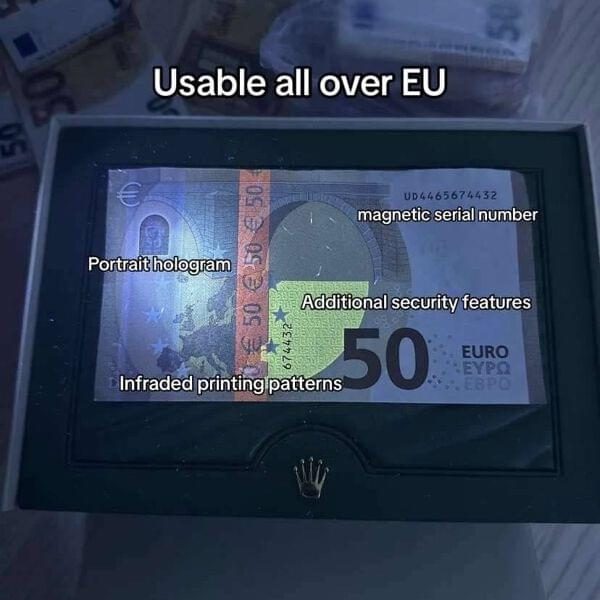
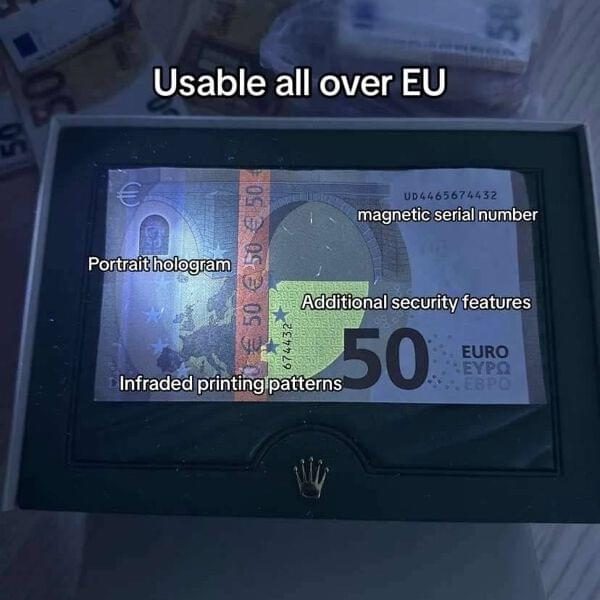
Every authentic Euro banknote contains multiple layers of protection. These are specifically designed to help individuals and businesses identify fraudulent currency instantly.
A. Watermark
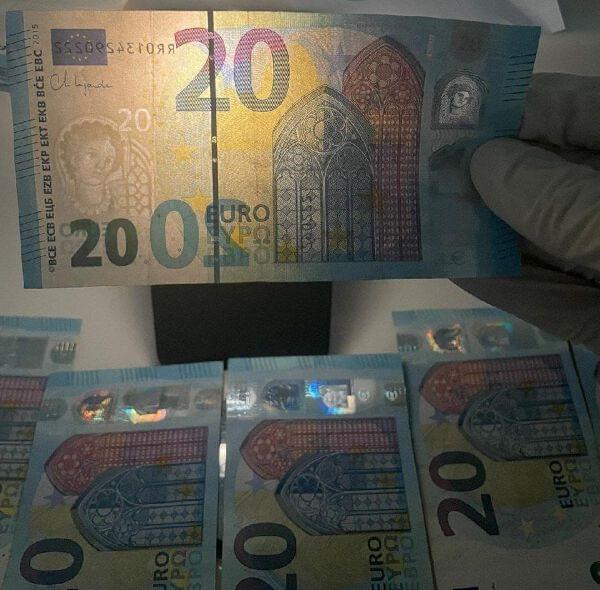
Hold the bill up to the light. You should see a portrait, value number, and architectural design visible in soft contrast within the paper.
B. Security Thread
A dark line running from top to bottom with microprinted text “EURO” and the value of the note. This thread should always be embedded—not printed.
C. Hologram Strip or Patch
Higher-value notes include reflective holograms showing alternating symbols or denomination numbers when tilted.
D. Raised Printing (Intaglio)
Run your fingertips along the front of the bill. Genuine notes have clearly raised ink, especially on the large denomination numbers and lettering.
E. UV Light Features
Under ultraviolet light:
-
Fibers glow in multiple colors
-
The flag of the EU appears bright
-
Stars and circles fluoresce
-
The note doesn’t shine uniformly, unlike common counterfeit paper
These features are essential tools for spotting fake euro bills quickly and safely.
4. How to Detect Fake Euro Bills (Simple Tests)
You don’t need expensive equipment to perform basic checks. Everyday users and stores can rely on simple but effective methods:
1. Touch Test
Check for raised ink, firm cotton-like texture, and embossed lines. Real Euro paper feels crisp, not waxy.
2. Tilt Test
Tilt the note to verify that the hologram changes images. Counterfeits often display static or blurry holographic patterns.
3. Light Test
Hold the note against a bright light. Ensure the watermark and security thread appear clean, not printed.
These tests can flag suspicious notes instantly without any specialized training.
5. What To Do If You Suspect a Counterfeit
If you believe you’ve come across counterfeit currency:
-
Do not use it, accept it, or return it to the suspect source.
-
Safely store the note without folding or damaging it.
-
Report it to your local police authority or bank.
-
Provide a clear description of where you received it.
The ECB clearly states that knowingly passing counterfeit money is illegal, even if you received it unknowingly. Handling the situation correctly protects both you and others.
6. How Businesses Can Protect Themselves
Shops, restaurants, vendors, and cash-heavy businesses can reduce risks through:
-
Staff training on identifying security features
-
Using UV lamps or pen detectors
-
Installing cameras at cashier stations
-
Maintaining strong cash-handling procedures
-
Regularly updating staff on new counterfeit trends
A few minutes of training can prevent large financial losses in the long run.
7. Trusted Resources for Verification
Here are reputable sources for authentic information about Euro banknote security:
-
European Central Bank (ECB) – Official Security Features Guide
-
Europol – Counterfeit Currency Reports
-
Local banking authorities for updated alerts
These sites provide imagery, downloadable PDFs, and verification tips useful for both individuals and retailers.
8. Final Thoughts & Where to Learn More
Awareness is the strongest defense against fake euro bills. By understanding the security features built into genuine Euro banknotes, performing quick detection tests, and staying informed through official channels, you can drastically reduce your risk of encountering counterfeit currency.
For more guides, safe-handling tips, and research-related educational content, visit:
👉 hashking-psylab.com